

When to Send GOTV Calls and Texts Before Your Election Day
Timing is everything for election outreach.
Send your Get Out The Vote, or GOTV, calls and texts too early, and voters forget. Send them too late, and you miss early voters or overwhelm your contact universe.
This guide breaks down exactly when to send GOTV calls and texts before an election, based on voter behavior, early voting windows, and response trends.
Before You Begin: Increase Recognition With a vCard
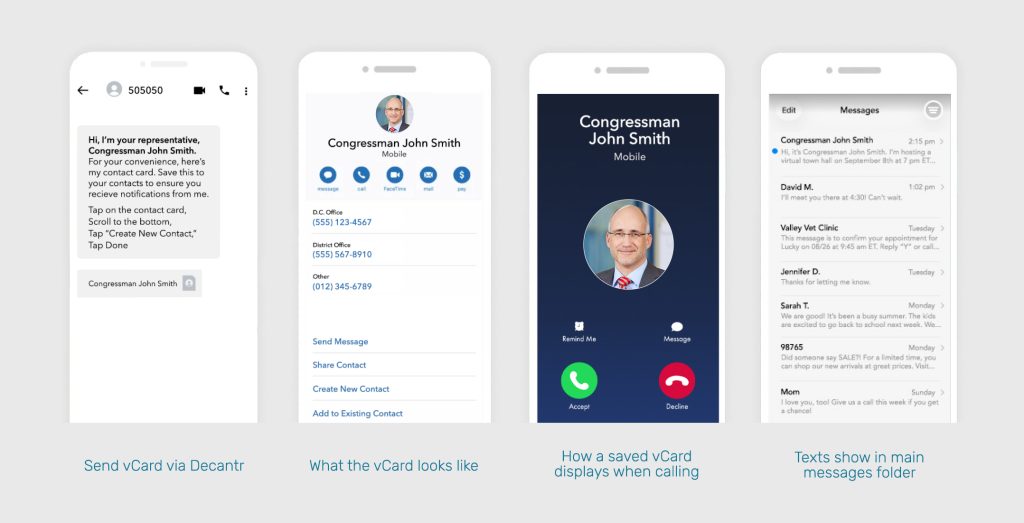
Before launching your GOTV calls and texts, some campaigns send a digital contact card (vCard) to their target universe.
A vCard allows voters to save your campaign’s phone number directly into their contacts. When your campaign calls or texts later, your name appears on the screen rather than just a phone number.
This approach focuses on recognition.
Why Campaigns Use vCards
As voters receive more calls and texts across all areas of life, many rely on contact recognition to quickly determine which messages to engage with.
Providing voters with your campaign’s contact information in advance can:
- Reduce the likelihood that calls are screened or marked as spam (by the recipient and by the phone itself)
- Increase familiarity when outreach begins
- Support stronger engagement during the final GOTV push
- Reinforce campaign branding across channels
WHEN TO SEND A VCARD
Campaigns that use this approach often:
- Send the vCard 10 – 14 days before their GOTV ramp-up
- Pair it with a brief introductory message
- Transition into turnout-focused outreach in the final week
This sequence builds familiarity before urgency messaging begins.
Why This Strengthens the Overall GOTV Plan
Rather than introducing your campaign during your highest-pressure turnout window, you establish recognition first. When GOTV calls and texts begin, voters are more likely to recognize the campaign immediately.
For elections, where efficiency and timing matter, even minor improvements in recognition can compound across the complete outreach strategy.
The Ideal GOTV Timeline Before an Election
This phase is about confirmation and segmentation.
Recommended tactics:
- ID calls to confirm support
- Issue reminders tied to the election
- Early voting awareness texts
- Vote-by-mail chase outreach
Why this timing works:
- Early voting often begins 2 – 3 weeks before Election Day
- Vote-by-mail ballots are already in voters’ hands in many states
- Supporters need information, not urgency
At this stage, messaging should focus on logistics, not pressure.
Objective: Shift from persuasion to turnout
This is when GOTV outreach should intensify.
Recommended tactics:
- Automated GOTV calls
- Personalized SMS reminders
- Polling location information
- Early vote deadline reminders
Voter behavior insight:
Most voters decide whether they will actually cast a ballot during the final week. Contact during this window has a measurable impact on turnout.
Frequency guidance:
- 1 – 2 touches per channel
- Avoid daily repetition
- Prioritize high-propensity supporters first
Objective: Create urgency
This is prime GOTV time.
Recommended tactics:
- Automated calls with urgency messaging
- Text reminders with polling hours
- Push to voters who have not yet cast ballots
- Volunteer mobilization calls
Best practice:
Run updated voter file checks daily to suppress voters who have already voted.
Message tone:
Direct, simple, action-oriented.
Example structure:
- Polls open at 7 AM
- Your location is XYZ
- Election Day is Tuesday
Short messages outperform long ones in the final 48 hours.
Objective: Real-time turnout push
Election Day outreach – both by automated phone calls and texting – should focus on:
Morning:
- Poll opening reminders
- “Today is the day” messaging
Midday:
- Turnout chase lists
- Target voters who have not yet voted
Late afternoon:
- Final push before polls close
- Clear closing time reminder
Important:
Election Day GOTV works best when lists are refreshed multiple times throughout the day.
Frequently Asked Questions About GOTV Timing
GOTV texting should begin 7 – 10 days before the election, with increased urgency in the final 72 hours.
Both channels work best when used together. Calls create urgency and reinforce persuasion, while texts deliver quick reminders and handle polling logistics.
Most campaigns aim for 3 – 5 total touches across channels during the final two weeks, depending on voter score and engagement history.
Yes, but only until they vote. Once a ballot is cast, it should be removed from the turnout universe.
The final 72 hours before Election Day consistently have the most significant impact on turnout.
If you’re building your GOTV program, talk with the Broadnet team about building a coordinated outreach strategy that aligns timing, targeting, and voter recognition.
Learn how Broadnet supports high-impact GOTV programs.